Why Spacing Is the Most Undertaught Fundamental
20 March 2026
The thing coaches skip
Watch a youth basketball practice this week. Any practice.
Dribbling lines. Layup drills. Some 3-on-3, then a scrimmage to finish. All useful. All familiar.
Now watch for what’s missing: at no point does anyone teach anyone where to stand.
Spacing is the foundation of team basketball. It decides whether a pass is available, whether a drive opens up, whether a shooter gets a clean look. But it’s invisible — you can’t put it in a layup line and rep it a hundred times.
So coaches skip it. And kids grow up not knowing it exists.
What spacing actually means
Spacing doesn’t mean “spread out”. That’s the oversimplification that lets everyone stop thinking about it.
Spacing means creating useful distance between players and the ball. Useful distance is:
- Far enough that the defence has to make a choice — guard me, or help on the ball
- Close enough that you’re a genuine threat — a pass away, within your range
- Positioned to give the ball-handler an angle to pass, not just a target to dump to
When good basketball looks easy, it’s usually because the spacing was perfect. Nobody noticed, because nothing broke down.
Why it’s hard to teach
Two reasons.
It requires vision. A player has to see the whole court, not just the ball. Kids are ball-fixated by nature. Training court vision takes hundreds of repetitions of not looking at the ball — and it feels wrong the entire time.
It looks passive. Good spacing often means holding your position and waiting. Youth players want to move. Standing still feels like not contributing.
That second one is the real fight. You have to reframe it out loud, again and again: your position is contributing.
The drill worth trying
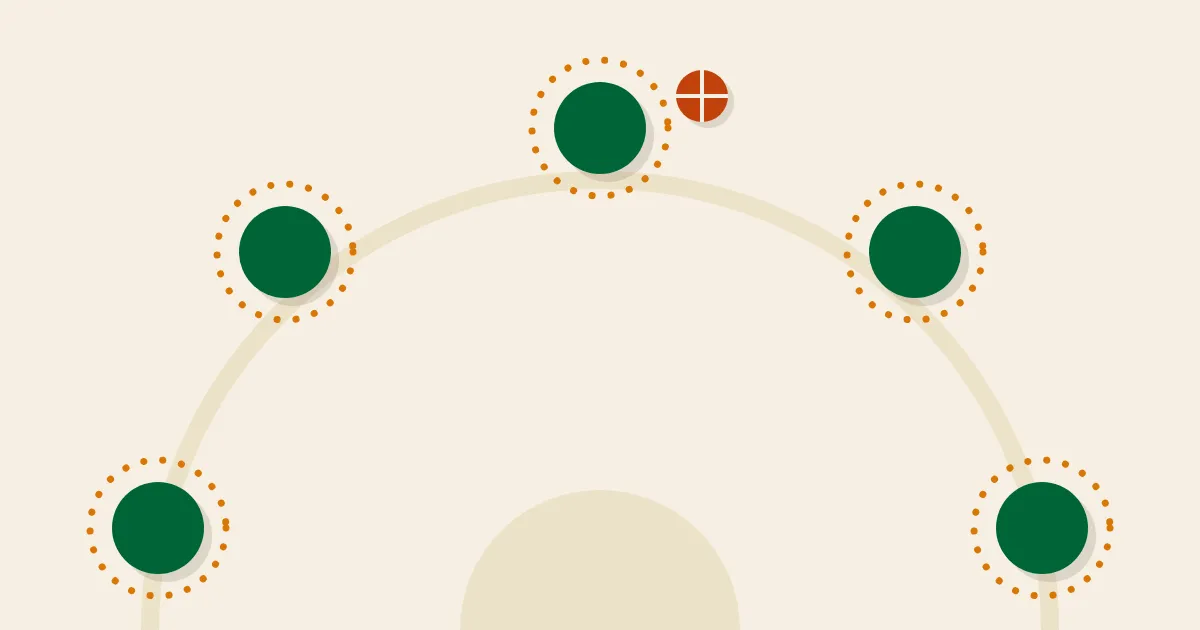
5-spot spacing drill.
Mark five spots on the floor — two corners, two wings, top of the key. Five players, one per spot. Ball starts at the top.
One rule: the ball must make at least four passes before anyone can drive or shoot. And after every pass, anyone who has moved must reset to a correct spot.
That’s it. No defence. Just practising coming back to the right spot.
The first five minutes are chaos. Players drift, bunch up near the ball, wander into the paint.
By minute fifteen, something shifts. They start to feel when the floor is wrong — an itch to fix it before you say anything.
That feeling is everything.
What this teaches
Spacing is the beginning of basketball IQ. Once a player understands it intuitively, everything else — reading the defence, off-ball movement, when to cut and when to hold — starts to make sense.
You can’t teach those things in isolation. But get the spacing right, and the rest of the game starts to organise itself.
That’s why we start here.
Where you stand is only one kind of space — the structural kind. There are four others, and they’re all taken apart in The Five Kinds of Space.
More in fundamentals
Same Game, Bigger Pitch: What a World Cup Taught Us About Spacing
24 July 2026
The Ball Moves Faster Than the Defence: Switching Sides to Create Opportunity
23 July 2026
Get Off the Straight Line: What Spain's Triangles Teach About Passing Angles
22 July 2026
Stay in the loop
New posts
by email.
Game breakdowns, session notes, and coaching ideas — when they're published, not on a schedule.
No spam. Unsubscribe any time.