Defend the Space: Driving Lanes, Help Defence and the Five-Player Read
26 November 2026
Everyone goes to the ball
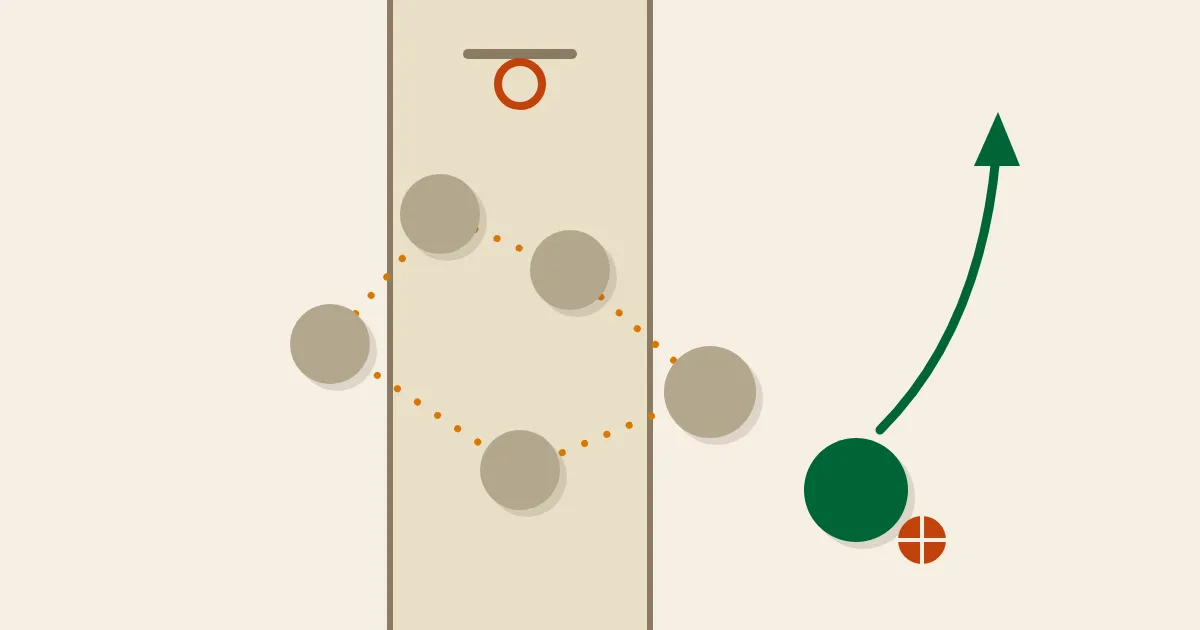
In our first game of the season, before a single training session, I watched four girls defend the way almost every young team defends: everyone went to the ball.
It worked, sometimes. It produced a few steals. It also left a huge amount of floor behind them, and the other team ran straight through it to the basket.
That instinct isn’t a flaw in the kids. The ball is where the action is, so the ball is where they go. Chasing it feels like defending. But a team that defends the ball is defending the one thing that can move faster than they can. The ball can be passed, dribbled or swung across the floor in a second. The basket doesn’t move.
So the shift we’ve been building all season is a simple one to say and a hard one to learn:
Defend the space, not the ball.
This post is the long version: what the space is, why young defenders give it away, and how five players learn to protect it together. And, because the two can’t be separated, how learning to defend this way makes them better on offence too.
The most common mistake: too much on the ball
Here’s the error I see more than any other in youth basketball, and it’s the one that looks most like effort.
The on-ball defender gets too aggressive. She closes out hard, gets right up into the ball-handler, reaches for the ball, and plays the ball instead of the player. It looks like competing. Parents cheer it. Sometimes it even gets a steal.
But every step she takes towards the ball is a step away from the basket. And when the ball-handler gets past her, which a decent dribbler will, there’s nothing between that player and the rim except open floor.
That’s the hidden cost, and it’s why I wrote about the foul that costs more than two points. An overplay doesn’t just risk a foul. It opens the driving lane, and it hands the problem to the help-side defence. Now a teammate has to leave her own player to stop the drive, and someone on the floor is unguarded because one defender wanted the ball.
The concept that fixes this, help defence and rotation, is usually left out of youth basketball. It tends to arrive when players get to representative teams or older age groups, and by then they’ve spent years learning to chase. I think that’s backwards. Young players’ minds are open. They want to understand the game. When you show them how it fits together, they get it.
What we’re actually defending: the channels
Think of the half court as a set of channels the attack can use to get to the basket:
- The middle. The most dangerous. A drive through the middle can go to either side, and every defender on the floor is in its path, so whoever helps leaves someone open.
- The sideline. The safest for us. A player driving down the sideline has the line on one side and our defender on the other. Half the floor is gone.
- The baseline. Dangerous if we’re not ready for it, useful if we are. A drive along the baseline runs straight into our help, if our help is home.
Our rule is simple: not through the middle. We push the ball to the sideline and the baseline, and we make the lines an extra defender.
Layer one: the on-ball defender
The on-ball defender’s job isn’t to take the ball. It’s to control where the ball goes.
That means three things, all of which we’ve built up over the season:
- Basket side. Stay between your player and the basket, always. In Game 5 I put it as a question: where do you want to be when she goes past you? If you’re basket side and she beats you, the basket is still behind you, not an open lane.
- Shade to the middle. Stand slightly on her middle-side shoulder, so the easiest path is towards the line. You’re not trying to stop her moving. You’re choosing which way she moves.
- Hands up, not hands out. From Game 2: keep your hands up, stay in front, and read. Reaching pulls your weight forward, and that’s how you get beaten.
This is pressure with discipline. It still pressures the ball. It just never gives up the space to do it.
Layer two: help-side defence
Here’s the truth young defenders have to accept: you will get beaten off the dribble. Everyone does. Good defence isn’t about never getting beaten. It’s about a team that’s ready when it happens.
That’s the help side. Every defender who isn’t guarding the ball has two jobs at once: see your player and see the ball. And the further you are from the ball, the more you sag into the key, because that’s where you’ll be needed.
For our age group, I keep the rule simple:
- One pass away: stand in the passing lane, ready to read the next pass. That’s where the two steals in Game 3 came from.
- Two passes away: at least one foot in the key. You’re the help.
When the ball-handler beats her defender, the help steps across, before the drive gets to the rim, and stops it. She doesn’t wait until the attacker is shooting. She gets to the spot first.
Layer three: the rotation
This is where it gets really interesting, and where the girls have to think, not just follow a rule.
The help has stepped across to stop the drive. Good. But she’s left her own player, who is now open. So the next read belongs to the next defender: who covers the helper’s player?
The principle is help the helper. When one defender leaves her player, the next closest defender rotates to cover the open one, and the rotation always moves towards the basket, so the most dangerous player is guarded first.
Somebody is always left open in a rotation. The goal is to make sure it’s the player furthest from the basket, at the end of the longest pass. A long pass gives the defence time to recover. A short pass under the basket doesn’t.
These are genuinely high-level concepts. But look at what they ask of a young player: watch the ball, watch your player, notice when a teammate is beaten, decide whether to help, decide who to cover. That’s decision-making. Every defender on the floor is reading the game, all the time, not just the one guarding the ball.
Five players, one defence
None of this works if one girl understands it. It needs all five.
If the on-ball defender overplays, the help has to rescue her. If the help isn’t home, the on-ball defender has nowhere to send the drive. If the helper steps across and nobody rotates, the open player gets a layup anyway. Each layer depends on the others.
That’s why the season philosophy talks about team defence: defending as a unit, not five individuals. When it works, five girls are connected by the ball: every pass, every drive, every step of the attack moves all five of them together. It’s the defensive half of the same idea this site is built on. Where you stand is a decision, and it affects everyone else on the floor.
The payoff: two on me means someone is open
This is the part I’m most excited about, and it’s why I think these concepts belong in youth basketball and not just rep teams.
A player who understands help defence understands offence.
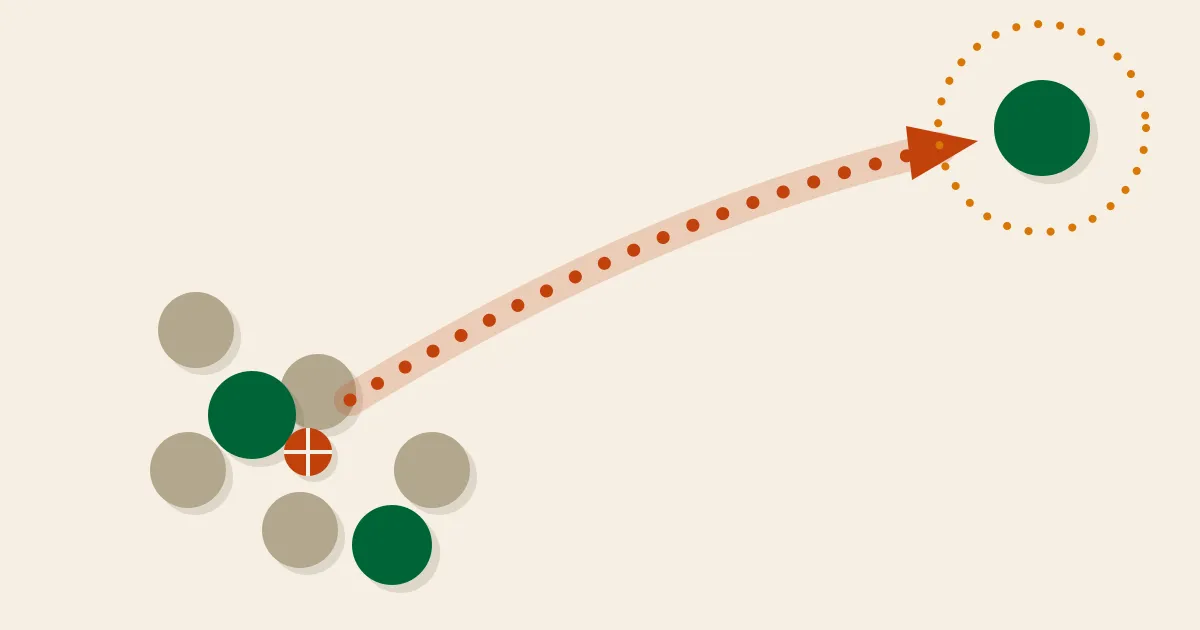
Once a girl has been the helper, and felt herself leave her player to stop a drive, she knows what it looks like from the other side. When she drives and a second defender steps across, she doesn’t panic. She knows what it means:
If there are two players on me, somebody must be open.
We’ve already seen this matter. In Game 4, the other team put all their attention on our best player, and we didn’t have an answer. By Game 7, against the same team and the same plan, the other girls were in the right spots, and a defence fixed on one player started to cost them. The press break we’re working on next is built on the same cue: if she’s doubled, pivot, protect, and find the free teammate.
Defending the space and attacking the space are the same skill, seen from two sides. A player who knows where help comes from knows where the open teammate is. That’s what Great Players Don’t Create Space Alone is about.
How we’re teaching it
One layer at a time, and each one embodied before we add the next. Every drill comes with one question, because I’d rather the girls work it out than be told.
1. One-on-one in a channel. A cone channel along the sideline. The defender’s only job is to keep the attacker out of the middle. We started this in Session 5. Question: “Which way did you send her?”
2. Two-on-two, help and recover. Ball on the wing, a second attacker on the far side. The ball-handler drives; the help steps across, stops the drive, then recovers to her own player when the ball is passed. Question: “When did you know she’d been beaten?”
3. Three-on-three, help and rotate. The diagram above, live. The drive comes, the help steps across, and the next defender has to rotate to the open player. Question: “Who was open, and who should have covered her?”
4. Four-on-four shell. The ball moves around the outside, no driving to start with. On every pass, all four defenders adjust: on the ball, one pass away, two passes away. Then we freeze it and ask each defender where she is and why. Then we add the drive. Question: “If I freeze it right now, is our floor right?”
And on offence, the same drills run the other way. In the two-on-two and three-on-three, once the help arrives, the attacker’s job is to find the player she left. Question: “Two on you. Who’s free?”
Why start now
I could wait. Most coaches do. Keep it to man-to-man, hands up, stay in front, and leave help and rotation for when they’re older.
But I’ve watched these girls take one instruction from a time-out and change how they play inside a single quarter. I watched one of them read the next pass and take it, twice, in a real game. They’re not too young for this. If anything, they’re the right age: they haven’t spent years learning to chase the ball, so there’s less to unlearn.
And when they see the game this way, as five players connected by the ball, protecting the space together, they don’t just defend better. They see the whole floor.
See it. Feel it. Play it.
More in fundamentals
Stay in the loop
New posts
by email.
Game breakdowns, session notes, and coaching ideas — when they're published, not on a schedule.
No spam. Unsubscribe any time.