Great Players Don't Create Space Alone: Why Rodri Won the Golden Ball
22 July 2026
The award that gave the game away
The World Cup is over. Spain won it, beating Argentina in the final, and the best-player award — the Golden Ball — didn’t go to a striker who scored a bag of goals. It went to Rodri, a holding midfielder, over Messi.
Sit with how strange that is. The single most valuable player at a World Cup was a man whose job is mostly to stand in front of his own defence, receive the ball, and give it to someone better placed. He finished the tournament with more completed passes than any player in a single World Cup ever has. His signature contribution wasn’t a highlight. It was making sure everyone around him always had somewhere to pass.
That’s the whole point of this series in one trophy. So let’s finish where we started.
The highlight lies to you
Here’s the moment everyone replays: a great player collects the ball, beats two defenders, scores. It looks like one person did something the rest of us can’t.
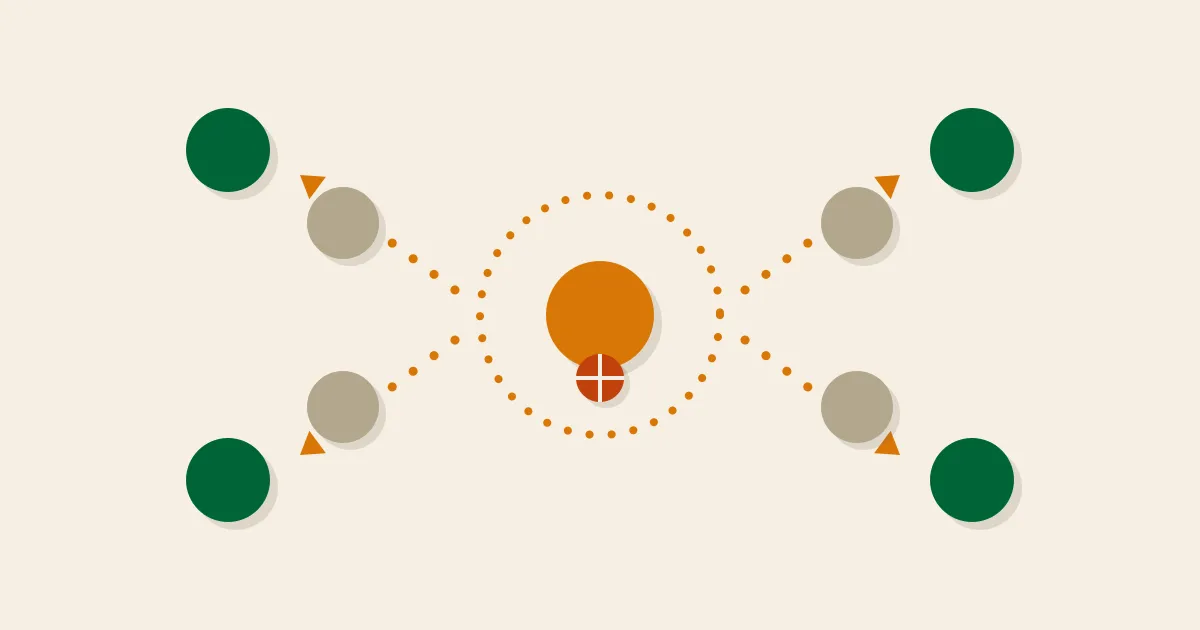
Now rewind ten seconds and watch the four players who never appear in the clip. One drifted wide and took a defender with them. One held a position that pinned two more. A third made a run that dragged the last covering defender out of the middle. By the time the star got the ball, the floor in front of them was empty — and it was empty because of the other four.
The genius is real. Nobody’s denying the talent it takes to finish. But talent operates in space, and the space was a team decision made several seconds before the talent got involved.
Everything in this series was in those ten seconds
This is the part I want you to see, because it ties the whole run of posts together.
- The patient build-up moved the defence side to side until it was stretched.
- A well-timed run pulled a defender out of the space the star would use.
- Teammates constantly adjusting their passing angles kept the ball alive through all of it — the thing Spain did better than anyone, and the reason they could hold the ball for whole exhausting stretches while the other team chased.
- The switch of play found the weak side and made the defence scramble across.
- And then, into the space all of that manufactured, the great player did the great thing.
Every concept we covered is present in the ten seconds before the highlight starts. The highlight is just the last frame.
This is what the reporting on Spain kept circling. Everyone knew the plan — keep the ball, work the angles, make you defend forever — and no one could stop it anyway, because the plan wasn’t a trick. It was five, six, eleven players doing the unglamorous spacing work so relentlessly that the openings became inevitable. The stars still scored. But the system decided where they got to.
What this means for your team — both directions
For a coach of nine-year-olds, this cuts two ways, and both matter.
For the four who aren’t the star: your spacing is a contribution, even though it will never show up in the score sheet. Holding the corner is an assist — it just arrives two passes early. The run you made that dragged your defender away created the layup, even though someone else got the high-five. This is the same truth as the gravity a big threat creates: the space one player enjoys was paid for by four others. Rodri just won the world’s biggest individual award for exactly this work, so nobody gets to call it the boring job anymore.
For the best player on the team: the space your teammates give you is a gift, and the worst thing you can do with a gift is admire it. When the floor opens up, attack it — now, while it’s open. Ishaan’s drive only works if he takes the room the moment it appears; wait, and the defence recovers and the four seconds of work his teammates did are wasted. Use what they made for you.
For the coach: when you praise the kid who scored, ask the group one more question. Who made that possible? Then wait for them to find it — the run, the screen, the swing pass — and name it out loud. You are teaching them to see the ten seconds, not just the last frame. Do that all season and you change what your players think the game is.
The question, answered
The series opened with a question to ask while watching any match: who created that goal — the scorer, or someone who never touched the ball?
Now there’s a real answer. Everyone. The scorer and the four who moved the defence for them. Spacing isn’t the thing that happens instead of star play — it’s the thing that lets star play exist. Great players shine because a team’s spacing gives them somewhere to shine.
If the kids you coach finish the season understanding only that, they’ll spend the rest of their basketball lives making the players around them better — and getting better because of the players around them. Which, in the end, is the only version of the game worth teaching.
The empty pocket a star receives the ball in is what I call borrowed space — one of five distinct kinds. The full taxonomy is in The Five Kinds of Space.
More in fundamentals
Same Game, Bigger Pitch: What a World Cup Taught Us About Spacing
24 July 2026
The Ball Moves Faster Than the Defence: Switching Sides to Create Opportunity
23 July 2026
Get Off the Straight Line: What Spain's Triangles Teach About Passing Angles
22 July 2026
Stay in the loop
New posts
by email.
Game breakdowns, session notes, and coaching ideas — when they're published, not on a schedule.
No spam. Unsubscribe any time.